Sumário
Comentário de William Darlymple sobre as características do Teatro em Portugal e acerca de uma representação de The Gamester (1774)
Ano
1774
Comentário
Traduções de Rui Vieira Nery e Laureano Carreira
Impresso
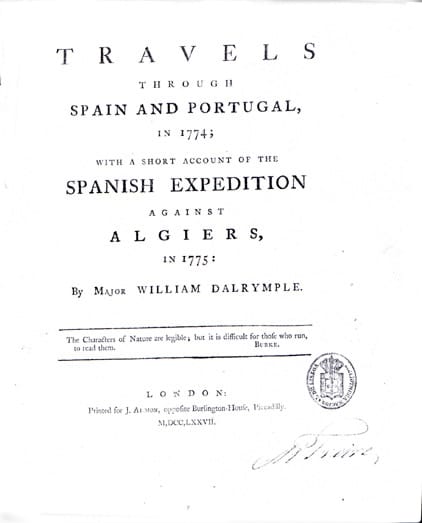
William Darlymple, Travels through Spain and Portugal in 1774, London, J. Almon, 1777, pp. 150.151
Menções
Laureano Carreira, O teatro e a censura em Portugal na segunda metade do século XVIII, Lisboa, INCM, 1988, p. 396; Rui Vieira Nery

William Darlymple, Travels through Spain and Portugal in 1774, London, J. Almon, 1777

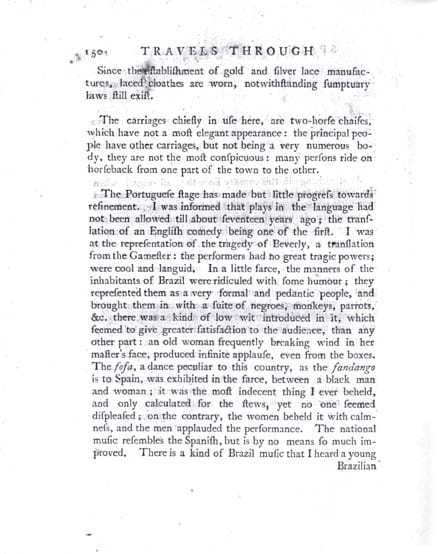
The Portuguese stage has made but little progress towards refinement. I was informed that plays in the language had not been allowed till about seventeen years ago; the translation of an English comedy being one of the first. I was at the representation of the tragedy of Beverly, a translation from the Gamester: the performers had no great tragic powers; were cool and langui.  In a little farce, the manners of the inhabitants of Brazil were ridiculed with some humour; they represented them as a very formal and pedantic people, and brought them in with a suite of negroes, monkeys, parrots, &c. There was a kind of low wit introduced in it, which seemed to give greater satisfaction to the audience, than any other part: an old woman frequently breaking wind in her master?s face, produced infinite applause, even from the boxes. The fofa, a dance peculiar to this country, as the fandango is to Spain, was exhibited in the farce, between a black man and woman; it was the most indecent thing I ever beheld, and only calculated for the stews, yet no one seemed displeased; on the contrary, the women beheld it with calmness, and the men applauded the performance. The national music resembles the Spanish, but is by no means so much improved. There is a kind of Brazil music that I heard a young
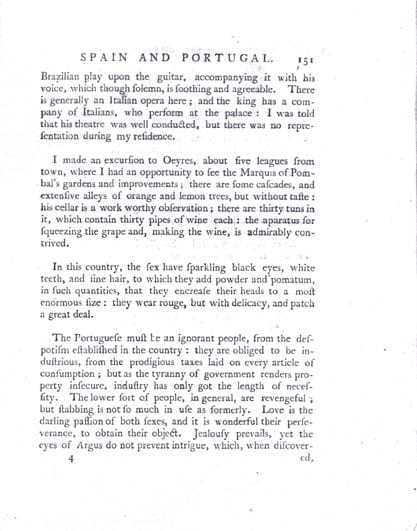
 Brazilian play upon a guitar, accompanying it with his voice, which though solemn, is soothing and agreeable. There is generally an Italian opera here; and the King has a company of Italians, who perform at the palace: I was told that his theatre was well conducted, but there was no representation during my residence.

Image 1139
Image 1140
Image 1141
William Darlymple, Travels through Spain and Portugal in 1774, London, J. Almon, 1777
O Teatro português fez poucos progressos no sentido de se refinar. Fui informado que as peças no idioma não eram permitidas até há cerca de dezassete anos; a tradução duma comédia inglesa foi uma das primeiras. Estive na representação da tragédia Beverley numa tradução do Gamester: os actores não tinham grandes poderes trágicos, eram frios e lânguidos. Numa pequena farsa, ridicularizava-se com um certo humor as maneiras dos habitantes do Brasil; estes eram representados como gente muito formal e pedante, e traziam consigo um séquito de negros, macacos, papagaios, etc.. Havia na peça um tipo de graça ordinária que parecia dar ao público maior satisfação do que qualquer outra componente: uma velha que frequentemente soltava gases na cara do seu amo produziu um aplauso infinito, mesmo dos camarotes. A fofa, uma dança típica deste país, como o fandango o é da Espanha, foi exibida no seio da farsa, dançada por um homem e uma mulher negros. Foi a coisa mais indecente que alguma vez contemplei, e feita apenas para agradar aos criados, mas, no entanto, não pareceu incomodar ninguém; pelo contrário, as mulheres assistiram a ela com toda a calma e os homens aplaudiram a execução. A música nacional parece-se com a espanhola, mas não está, de maneira nenhuma, tão desenvolvida. Há um género de Música do Brasil que ouvi tocar na guitarra a um jovem

brasileiro, acompanhando-se com a própria voz, e que, apesar de solene, é calmante e agradável. Há aqui geralmente uma Ópera italiana, e o Rei tem uma companhia de italianos que actuam no seu Palácio. Disseram-me que o seu Teatro é bem dirigido, mas não houve representações durante o meu período de residência.